Natural evolved technology.
After millions of years of co-evolution with multi-cellular organisms, the active molecule of INV-102 has become highly effective at triggering targets associated with the DNA damage response.


INV-102 activates p53: The ultimate cell regulator
INV-102’s primary effect is short term activation of p53. In times of crisis, p53 guides damaged cells to take the appropriate action. By slowing the cell cycle and stabilizing repair pathways, p53 gives the cell time to repair its DNA, but it can also deem the cell unrepairable, and thus initiate apoptosis.
The perfect pulse
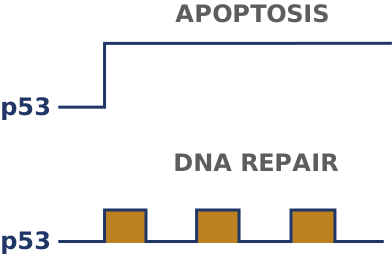
Sustained high levels of p53 can lead to unnecessary apoptosis. However, INV-102 creates a predictable, pulsatile increase in p53, allowing for optimum DNA repair without causing unnecessary cell death.
Decreased NF-κB means less inflammation
Cellular injuries often cause a spike in NF-κB production leading to a multi-cellular chain reaction that causes inflammation. However, because of p53’s antagonistic relationship with NF-κB, INV-102 also limits inflammation at the site of the injury, further improving cell stability.


One Platform –
Multiple Indications
Invirsa is planning to enter clinical trials by 2022. However, given the DNA stabilizing properties of INV-102, Invirsa is aiming to rapidly expand initial studies into other indications including viral pneumonia and dry eye.

Ocular (Primary)
INV-102, in non-clinical studies, has been shown to significantly improve recovery and reduce inflammation from DNA damage caused by sulfur mustard gas injury and adenovirus infection.

Respiratory
Invirsa is currently collaborating with Nationwide Children’s to study INV-102 for acute, viral lung infection.

Dermatological
Our skin is constantly faced with single-strand DNA breaks caused by UV radiation. Invirsa has hypothesized that INV-102 is a perfect candidate to treat surface UV injury whether caused by the sun or radiation therapy for cancer. Invirsa has multiple collaborations exploring this opportunity.

Collaborators